
The debate over Guardian Caps hit the news recently with a skewering breakdown on Pablo Torre Finds Out…

I like that Chris Nowinski is willing to use the terms “scam” and “virtue signaling” here. While there certainly are legitimate products out there, there are a lot of health-related products bordering on or fully in scam territory.
I always have a default skeptical eye when it comes to new products that claim to help prevent injury, improve performance, or speed healing. These are outcomes that are extremely difficult or even ethically impossible to do a quality study on, which makes them susceptible to flawed study results and clever marketing.
Over the years, we’ve seen magical new mouthguards advertised on Monday Night Football…

and pills to prevent concussions…

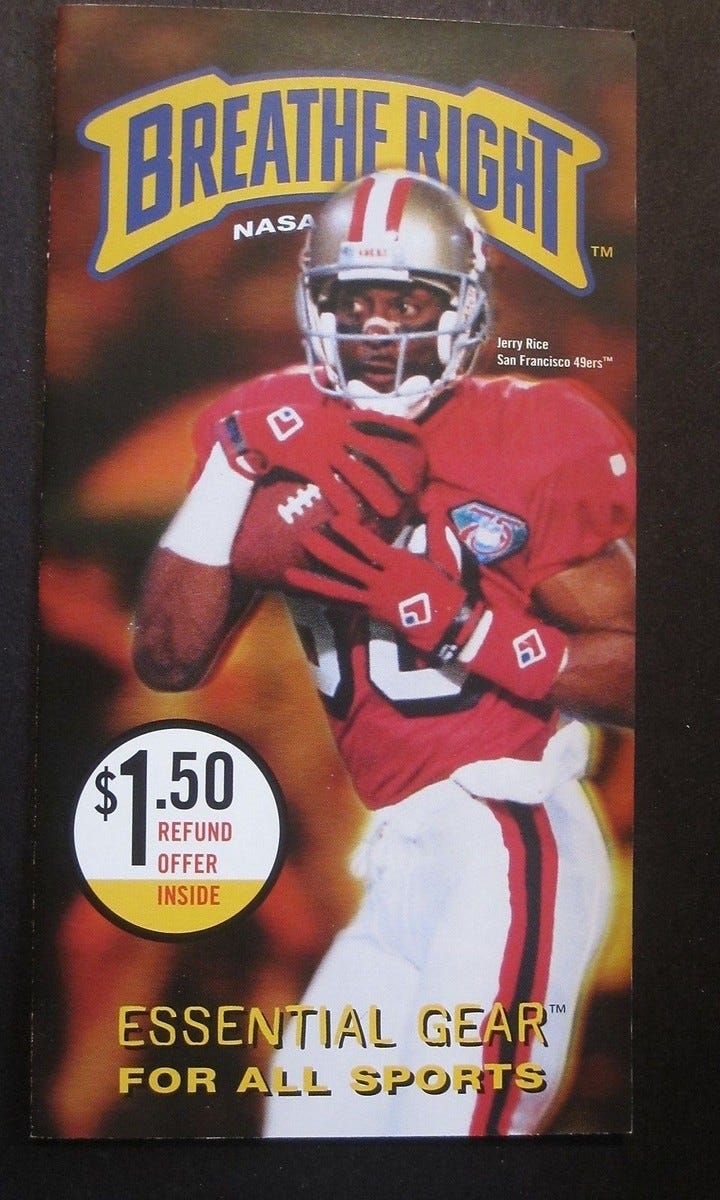
and who can forget the totally useless Breathe Right strips that players were being paid to wear…
What is the future for the Guardian Cap, along with another concussion-prevention device, the Q-Collar? Here is my current take…
GUARDIAN CAPS
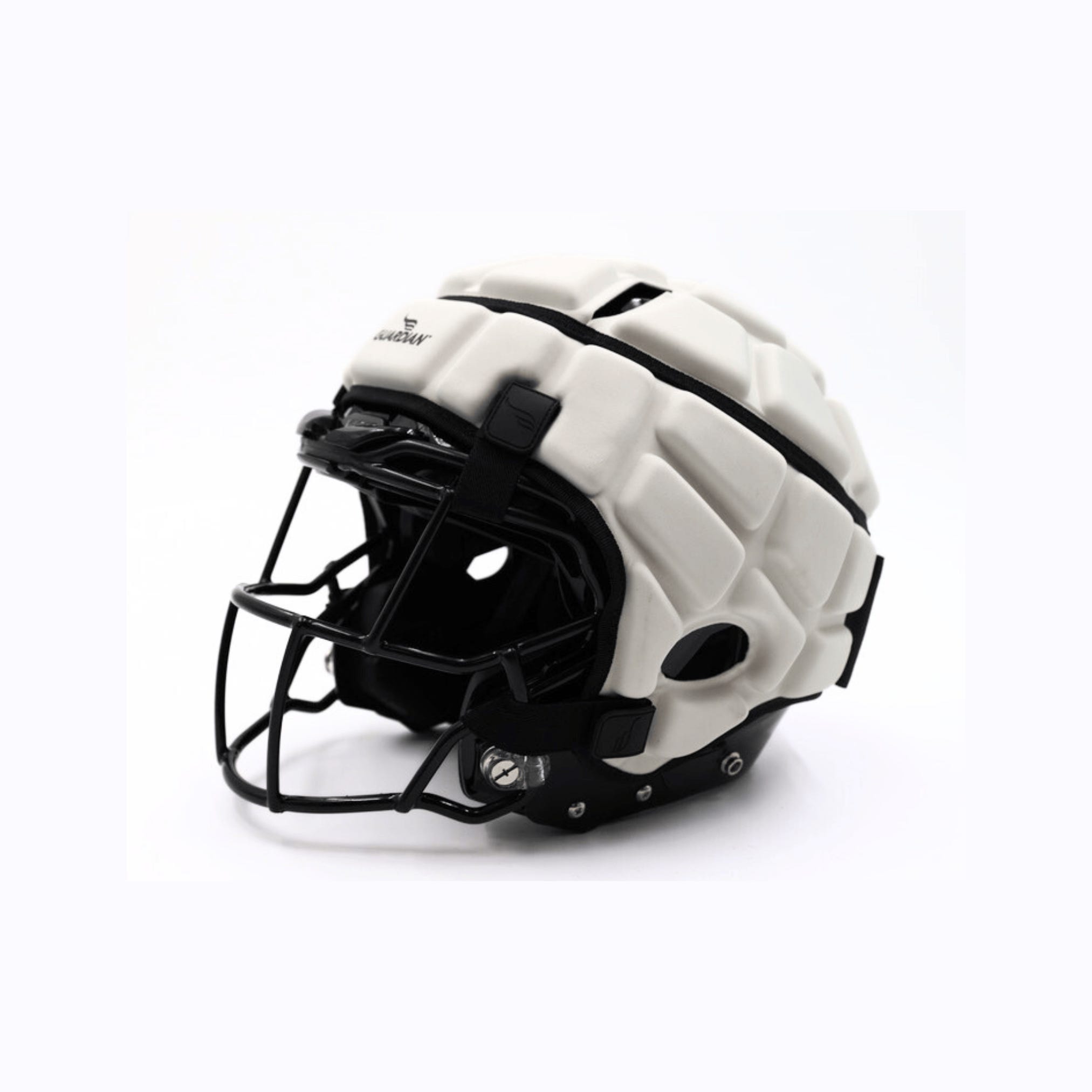
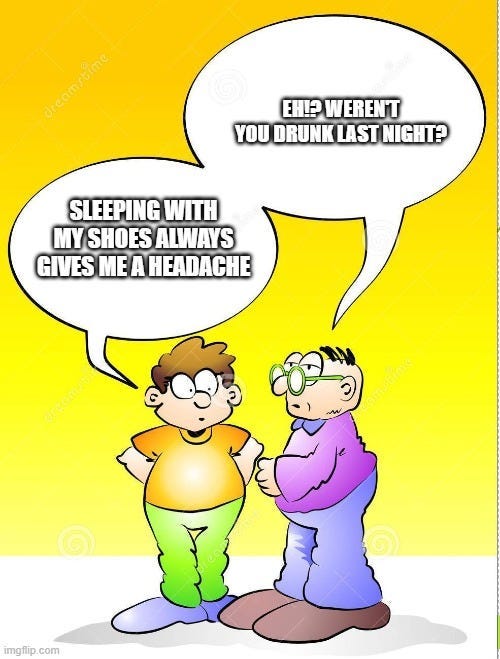
These caps utilize the very simple concept of adding padding to the outside of the helmet.
A couple data points to consider:
A study in 2023 concluded that Guardian Caps provided no significant benefit.
The NFL stated that there was a 50% decrease in concussions when players started wearing Guardian Caps in training camp.
Always remember that correlation does not mean causation...
Any decrease in concussions from wearing Guardian Caps could be due to a change in camp physicality, a change in mechanism of tackling (keeping head out of the way), a change in reporting, or some other unrelated factor.
The Positives of Guardian Caps
Theoretically, the caps should help prevent concussions slightly. The more padding on the helmet, the less force is going to make its way to the skull. Taken to an extreme, if players wore helmets the size of large beach balls, concussion rates would probably fall dramatically.
The Negatives of Guardian Caps
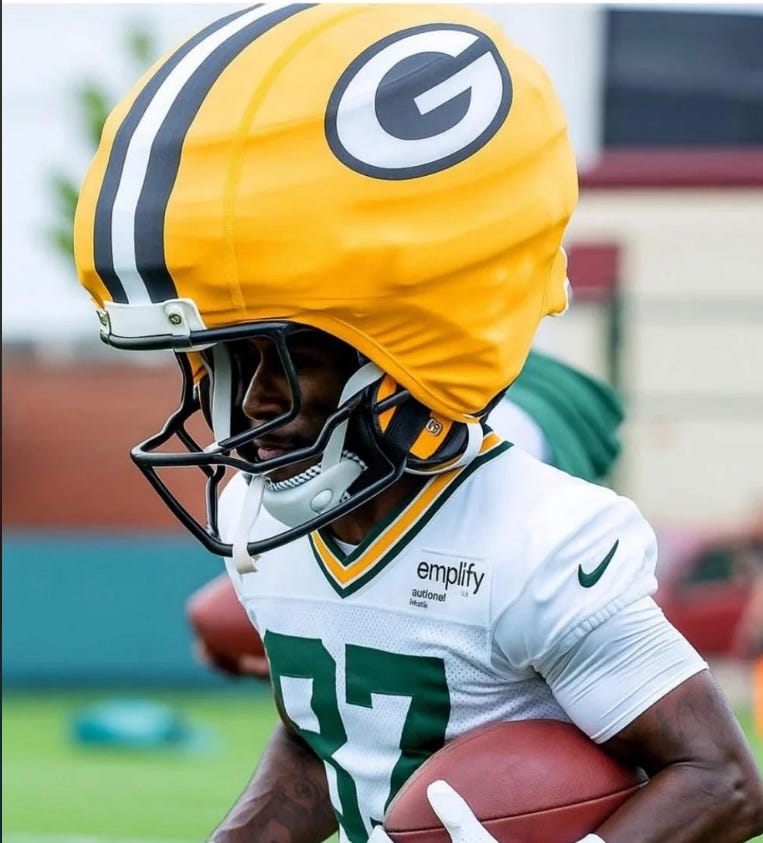
Beware of unintended consequences and side effects! As a doctor, I always consider the negatives of any medication, surgery, treatment, or device. You know there are negatives to the Guardian Cap, because if there were not, then players would be wearing 2, 3, or 10 at a time. And this meme would be a real thing…
Possible negatives:
The increased size of the helmet increases the likelihood of contact to the head. Any additional contact to the head is a chance for a concussion.
The increased weight could increase the whiplash forces on the head and the rotational forces on the head. This side effect could increase concussions caused by certain mechanisms.
The material of the cap has more friction and deep contours than a smooth plastic helmet. If the Guardian Cap “grabs” as it hits something, it could cause torsional forces on the head and neck. More neck injuries are possible.
Would I Wear the Guardian Cap?
If I had a significant history of concussions, I would consider wearing the Guardian Cap for the slight increase in protection to direct blows. I think the benefits are likely small and the side effects are likely small as well, so the decision is a toss-up.
Long-term, I would expect helmet manufacturers to offer options of bigger helmets with the extra padding added to the inside of the helmet.
Q-COLLAR
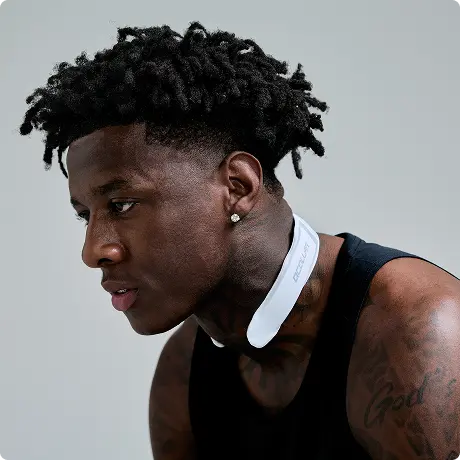
The Q-Collar is a strap worn around the neck to compress the jugular vein. The theory is that compressing the jugular vein increases the blood and fluid volume in the head, which helps reduce brain movement within the skull.
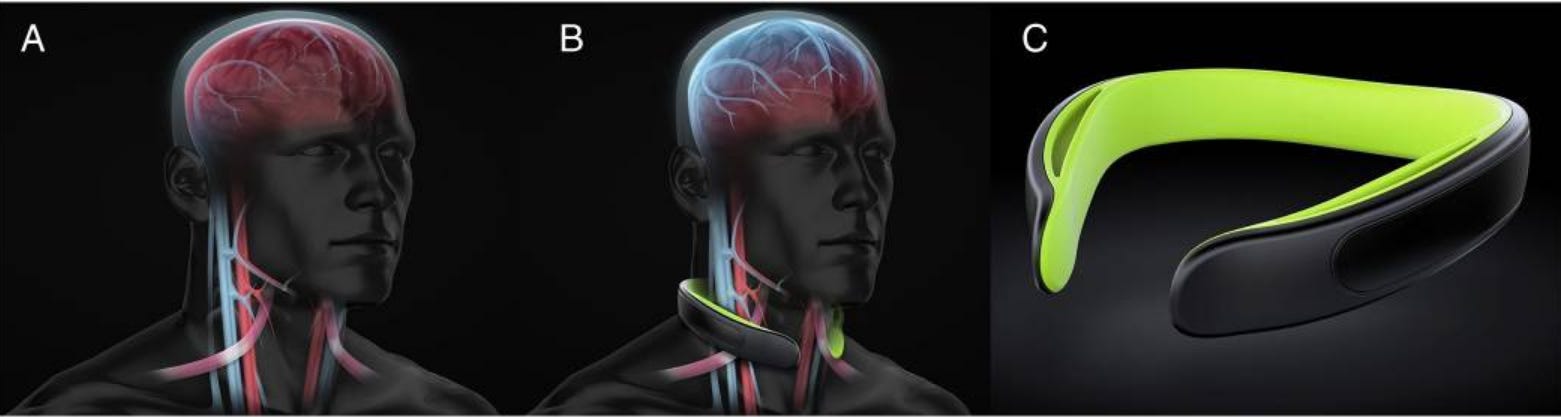
Concussions can be caused when the brain hits the inside of the skull, so if you can prevent this from happening, you would theoretically reduce concussions.
Here is the link to one of the major Q-Collar studies. I reviewed this study and here are my reasons for skepticism: