Kerby Joseph knee injury analysis
With Kerby Joseph heading to IR, a tumultuous season-long saga is over. Here is the complete analysis based on what we know as of December 20, 2025.
Let’s start with the full timeline…
Chronological timeline of Kerby Joseph left knee injury
2024 season Did not miss a game and made All-Pro.
2025 July training camp Bothered by an unspecified left knee issue the first few weeks of camp. The knee was still bothering him on August 14. He was able to return to practice on August 21.
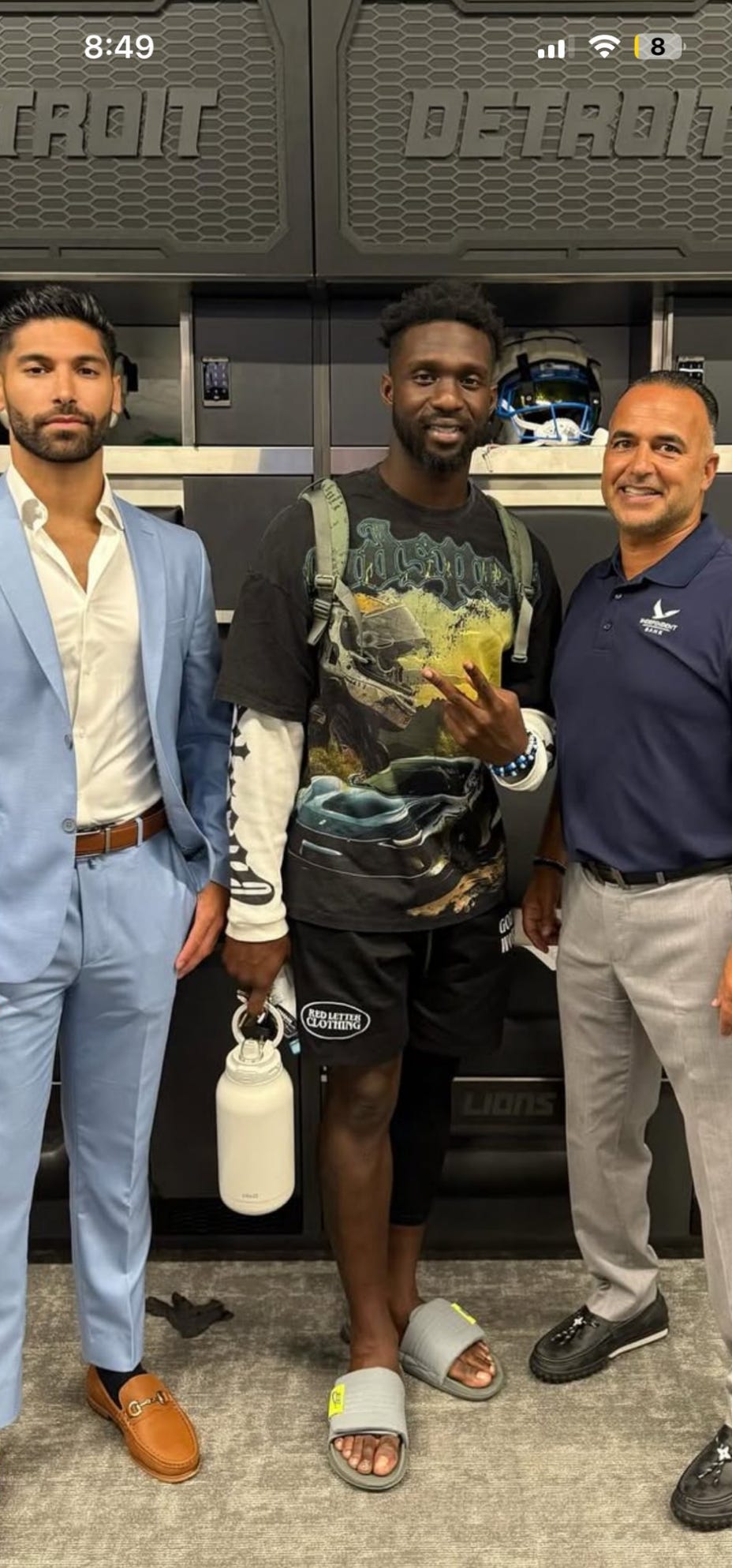
Here is a pic of him wearing a knee sleeve in late-July (credit @DrLurker6223 for the spot).
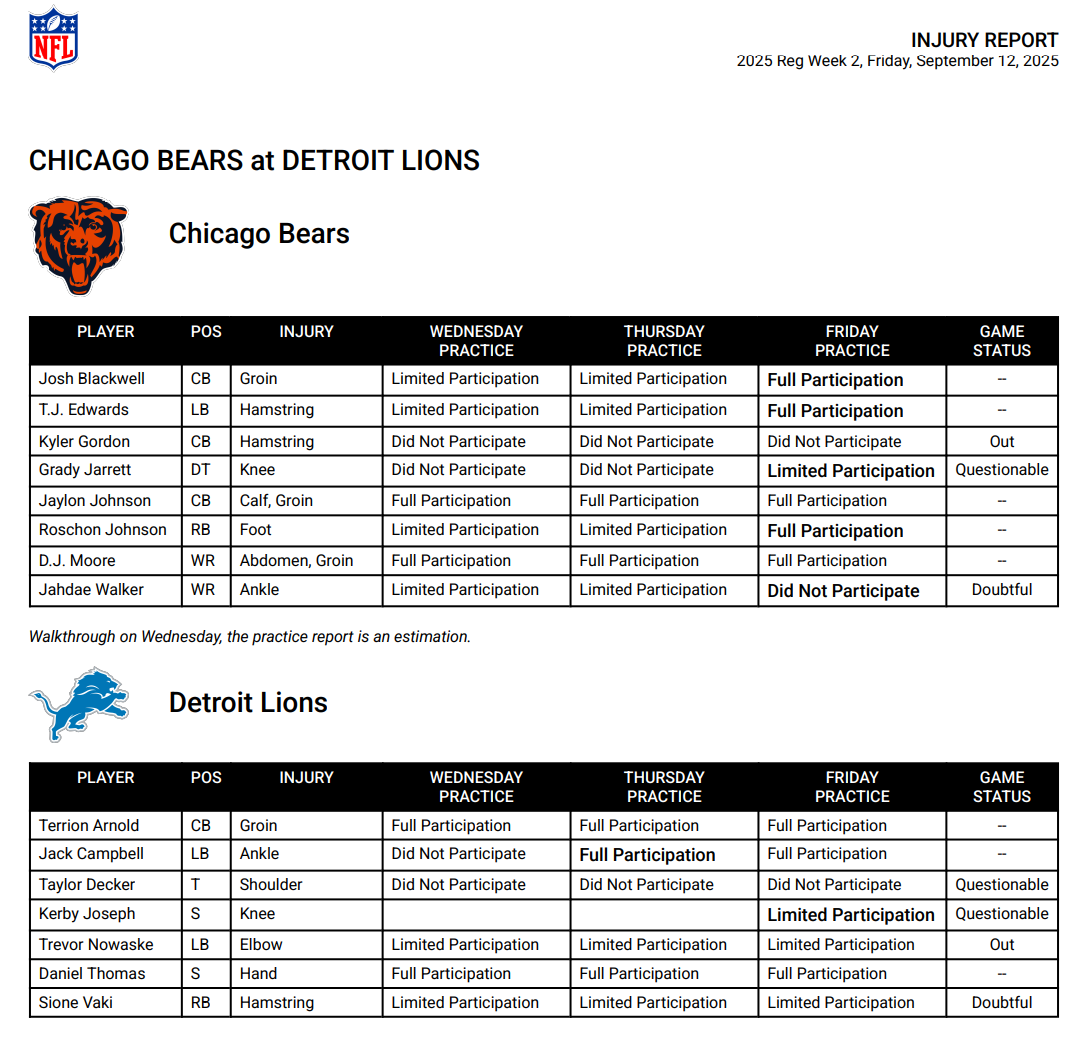
September 14 (Week 2) Knee pops up on Friday injury report
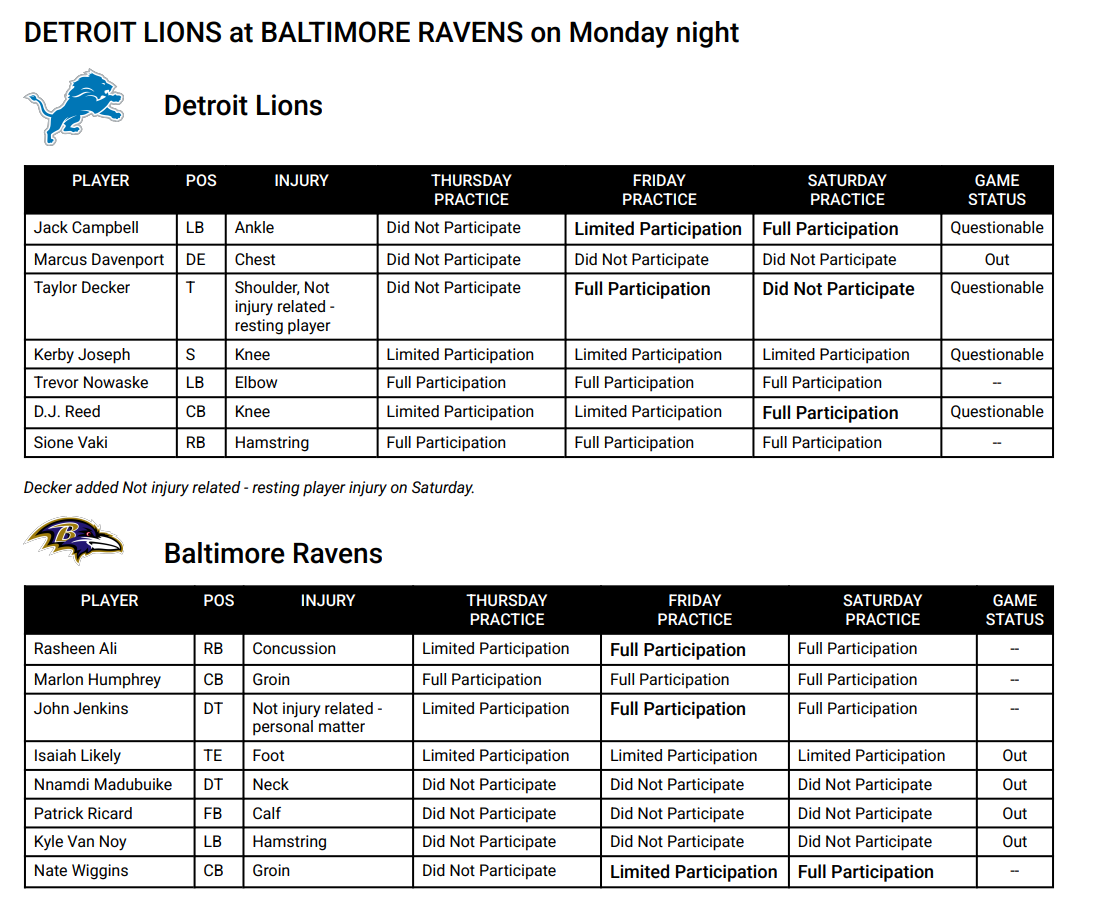
September 22 (Week 3) Knee is on report all week
September 28 (Week 4) Injures or aggravates knee as he is blocking on an interception return. My hope at the time was for “only” a mild PCL sprain or a simple contusion.
October 5 (Week 5) Plays with left knee brace.
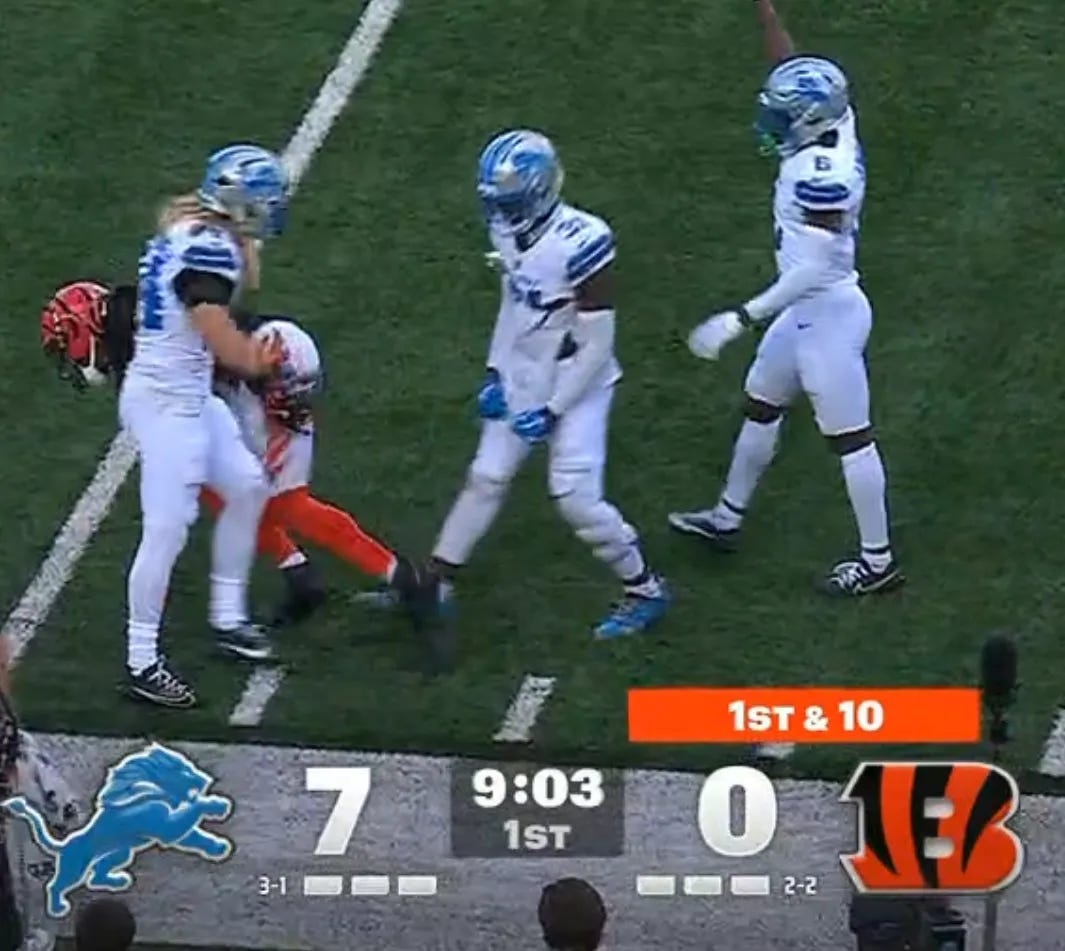
October 12 (Week 6) Did not wear knee brace this game. Clearly hampered by knee early in game. You can see in the video that he has discomfort with flexing his knee causing his foot to drag.
He ends up being helped off field, but then returns to finish the game. This was his last game of the season of which he played 6 games.
November 30 (Week 14) Dan Campbell provides first details of injury.
Key statements are:
“Trying to get some stability… which will help some of the pain and wear-and-tear… so it doesn’t wear out as fast.”
“I don’t think it’s necessarily going away but you do the best you can to manage it…. It’s like a lot of these guys that have deals which could be cartilage or meniscus…. There will always be a little wear-and-tear. It’s just how bad is it.”
“Bone bruise is certainly part of it… He’s got some wear.”
Kerby Joseph himself stated: “My knee’s messed up. Don’t fix it. Just keep the faith.”
December 1 Joseph starts the week with a limited practice which is his first practice since before Week 6. In this video courtesy of @colton_pouncy, you can see him trying not to put weight on that left leg.
He did not practice the rest of the week.
December 10 (Week 15) Joseph again starts the week with a limited practice and does not practice the rest of week. This was also his last practice of the season.
December 12 Dan Campbell in his press conference says there has been a “setback”.
December 20 (Week 16) Joseph placed on IR. While he is eligible to return in Week 2 of the playoffs, his season is likely over.
ANALYSIS
I have no inside information so these thoughts are educated guesses and speculation based on what we know publicly. No definitive diagnosis has been reported or disclosed so far.
What is the main concern?
The main concern and suspicion is Joseph has significant damage to the articular cartilage of the knee - specifically to the tibia and/or femur, with the patella also a possibility. The articular cartilage is the slick surface that coats the bones and allows joints to glide smoothly.
Here are the points of data leading to this suspicion:
The phrases “not going away”, “wear-and-tear”, and “wear out” used by Campbell are often used to describe the effects of articular cartilage damage.
Confirmed bone bruise which can be a cause or effect of articular cartilage damage due to tibia and femur impact in the joint.
Discomfort with flexing and bearing weight on left leg as seen in videos. Bearing weight on missing cartilage can cause discomfort.
Unpredictability of recovery causing the delayed placement on IR as well as inability to practice more than once in a week. The effects and recovery of articular cartilage damage are difficult to predict.
Was the knee injury during training camp the same as the one that is going on now?
It’s possible he has multiple injuries, but my suspicion is that the main problem started prior to training camp. He rested for a while early in training camp and the hope was probably that it would be stable through the season. The knee was then aggravated in Week 4 and never really got better after that.
Why was he not put on IR initially?
Medical likely felt he had a chance to return within 4-6 weeks. Cartilage effects and recovery are difficult to forecast. With a star player, carrying him on the active roster is worth it even if it only saves a single game. The Lions have had healthy inactives every game so the gameday impact was minimal.
Does the knee brace tell us anything?
Here is a pic of him wearing a knee brace (credit @j_ekks for the spot).
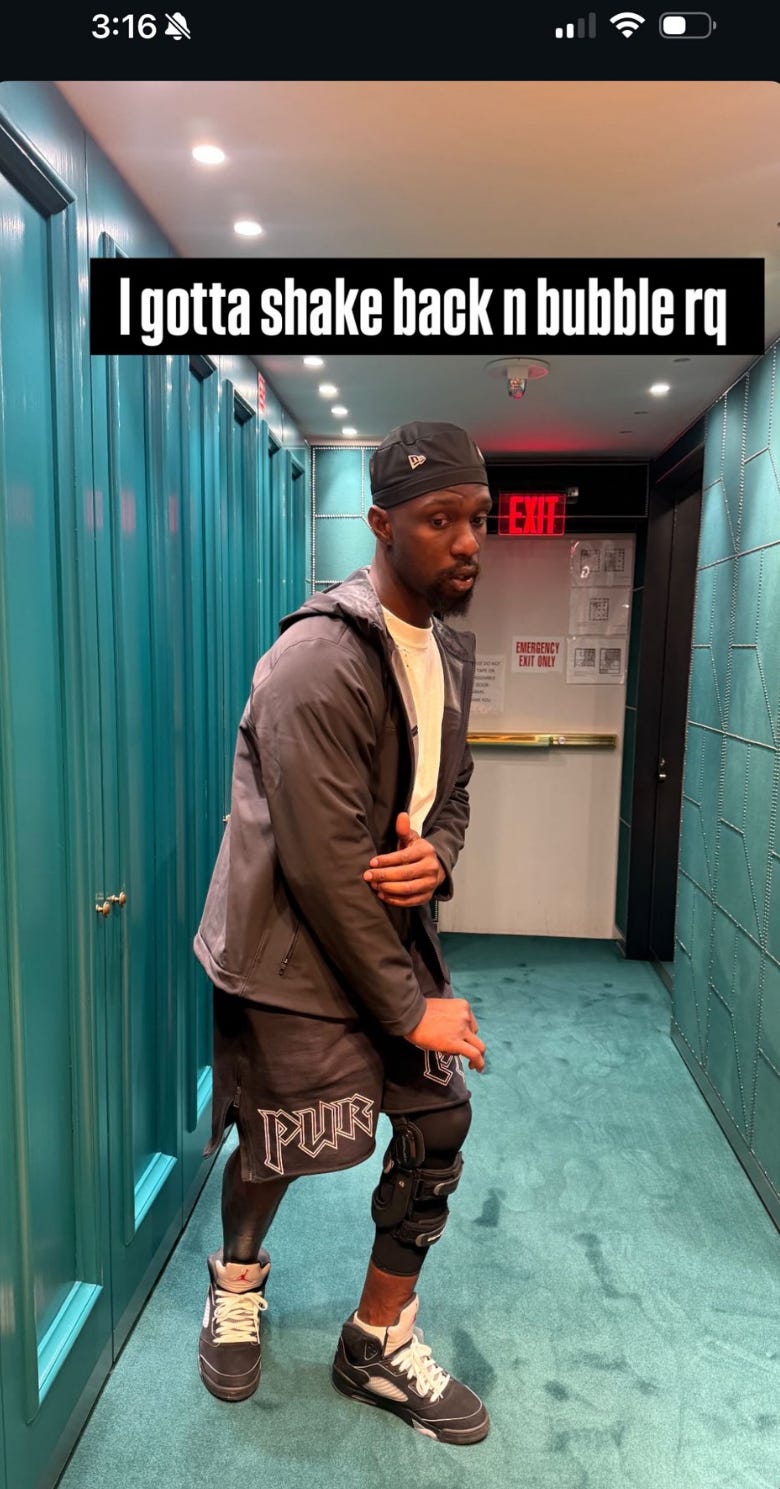
The knee brace seen in practice could be an unloader knee brace which is used to offload weight from the damaged part of the knee cartilage. By decreasing the load on the worn-out part of the knee, it may help with symptoms and prevent further wear.
What other athletes have had articular cartilage damage?
As many readers have pointed out, articular cartilage damage is what Lonzo Ball, Brandon Roy, Greg Oden, Todd Gurley, Jadeveon Clowney and many others have publicly dealt with. Most have milder cases that you never hear about.
If it weren’t for the gradual wear of articular cartilage, we might see a lot of players playing into their 40’s. Barry Sanders at age 57 might still be out there making fools of defenders.
Can he just play through the pain?
While the symptoms may be primarily pain/discomfort, it’s not as simple as just playing through. Even a tiny discomfort in a joint can dramatically affect athletic ability.
Also, playing through articular cartilage pain likely means more damage, worsening symptoms, and further decline of athletic ability.
Did Joseph already have a surgery?
It’s very possible that he already had a arthroscopic (scope) surgery earlier in the season. A scope is minimally invasive and players can return in less than a month. We saw Frank Ragnow return in 2 weeks in 2023.
A knee scope is not just used for treatment, but also for diagnosis as it allows direct visualization inside the knee. While an MRI is good, it’s not perfect. Direct visualization can see cartilage issues that an MRI might miss.
If he had a scope, it was probably just for diagnosis and trim/cleanup. Any definitive treatment to patch articular cartilage typically carries a multi-month recovery, which almost certainly would have put him immediately on IR and out for the season. It’s quite possible he will attempt some kind of definitive treatment now that his season is over.
What is the long-term prognosis?
If this is cartilage damage, the prognosis is highly variable and difficult to predict. The loss of cartilage can lead to a “degenerative” knee or arthritic-type symptoms. The disability is largely due to the discomfort of joint movement which is not something that can be measured.
The concern going forward is if the knee will ever be able to handle intense activity like football. Maybe extended rest will help, but with articular cartilage damage, it’s not something that can heal itself.
There are orthopedic procedures that can try to patch/repair the defect such as OATS (Osteochondral Autograft Transfer System), MACI (Matrix-induced Autologous Chondrocyte Implantation), among others. In the past, microfracture surgery was used, but nowadays OATS has been shown to be superior. With any of these procedures, the results vary and there is no guarantee that his knee will get back to where it was before.
Injections of such things as corticosteroids, hyaluronic acid, PRP, and stem cells are options but the results are variable.
The details of the damage as well as the preference of the orthopedic surgeon determine the treatment options. The hope is that some kind of treatment or procedure can prevent further wear on the knee, alleviate symptoms, and allow him to continue playing football.
Could any of this have been forecasted?
Many are blaming the medical staff for this which isn’t fair. If this was indeed articular cartilage damage, then the way it was managed and played out all makes sense from a medical standpoint.
Articular cartilage damage has a very unpredictable prognosis. Since it doesn’t really heal, it comes down to how quickly pain/swelling resolve which is highly variable with each player.
Once you stress the knee again, it’s hard to predict if the pain/swelling will come back. That would explain why Joseph had 2 early-week practices and then missed the rest of those weeks. The knee may have flared up after each practice, which meant that it was unable to handle that level of activity.
What about the Jordan Schultz source saying that the injury is “not considered career-altering”?
If the source is accurate, that would contradict what Dan Campbell and Kerby Joseph himself said. Often times, the source for national reporters is the agent who has a clear incentive and duty to spin news favorably for the client.
Joseph will get all his guaranteed money so that’s not the issue. What’s at stake are future salary, option bonuses, roster bonuses, workout bonuses, etc. Also, if he does get released at some point, he could try to land a contract with another team.
What is his contract status?
Joseph signed his 4-year extension in the April, 2025. The dead cap is about $20 million after this season, then drops to about $6 million after 2026. While it would be challenging to the Lions salary cap to move on after the 2025 season due to the acceleration of dead money, it would save about $2 million in option/workout bonuses.
Final thoughts
Unfortunately, knee cartilage wear comes for pretty much all of us eventually. If that’s what’s going on with Joseph, it can be emotionally difficult to deal with.
Hopefully, the extended rest along with treatment or procedures will allow him to continue playing football if that is his desire. Wishing the best for Kerby Joseph both during the rest of his career and beyond.


