
With the Detroit Lions 2026 NFL Draft Analysis completed, of course we must now compare to what the Green Bay Packers, Chicago Bears, and Minnesota Vikings did in the draft. I’ll focus on the age and medical perspectives to see how the strategy of the divisional rivals may have differed from the Lions.
For the prospects I analyzed pre-draft, their medical concern levels and injury history are included. For the prospects I did not analyze pre-draft, only their age is included.
Medical concern level ranges from 0 (no concern) to 10 (extreme).
(Ages in parentheses are at start of 2026 season and are factored into the concern level. Injury info and ages based on available public information.)
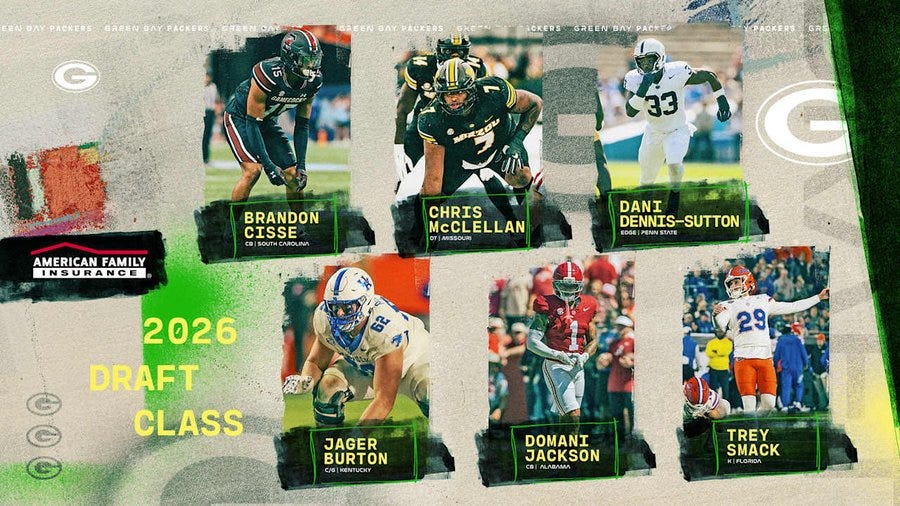
Green Bay Packers 2026 NFL Draft
Round 2, #52: Brandon Cisse, CB (21): forearm, wrist, knee, upper-body - 4/10 medical concern
Round 3, #77: Chris McClellan, DT (22)
Round 4, #120: Dani Dennis-Sutton, EDGE (22): groin, dislocated elbow - 1/10 medical concern
Round 5, #153: Jager Burton, C (24): leg injury, age - 3/10 medical concern
Round 6, #201: Domani Jackson, CB (23)
Round 6, #216: Trey Smack, K (23)
The Cheeseheads were without a 1st round pick this year due to the Micah Parsons trade.
From an age standpoint, only once did they dip into the 24-and-older pool of prospects. Three of their six picks were 22 and younger, suggesting youth may have been a priority for the Packers.
Their first pick of the draft, Brandon Cisse, has a moderate concern level. A quick review of their next pick, 3rd-rounder Chris McClellan, shows that he is very clean medically.
Their 4th-rounder, Dennis-Sutton, has a very low concern level and was projected to have been a consideration for the Lions given their EDGE needs. Instead, the Lions opted for LB Jimmy Rolder just two picks earlier.
Overall, the Packers appear to have had a medically low-risk draft. This safe strategy may have been influenced by the fact that their de-facto 1st-rounder, Micah Parsons, suffered an ACL tear last season.
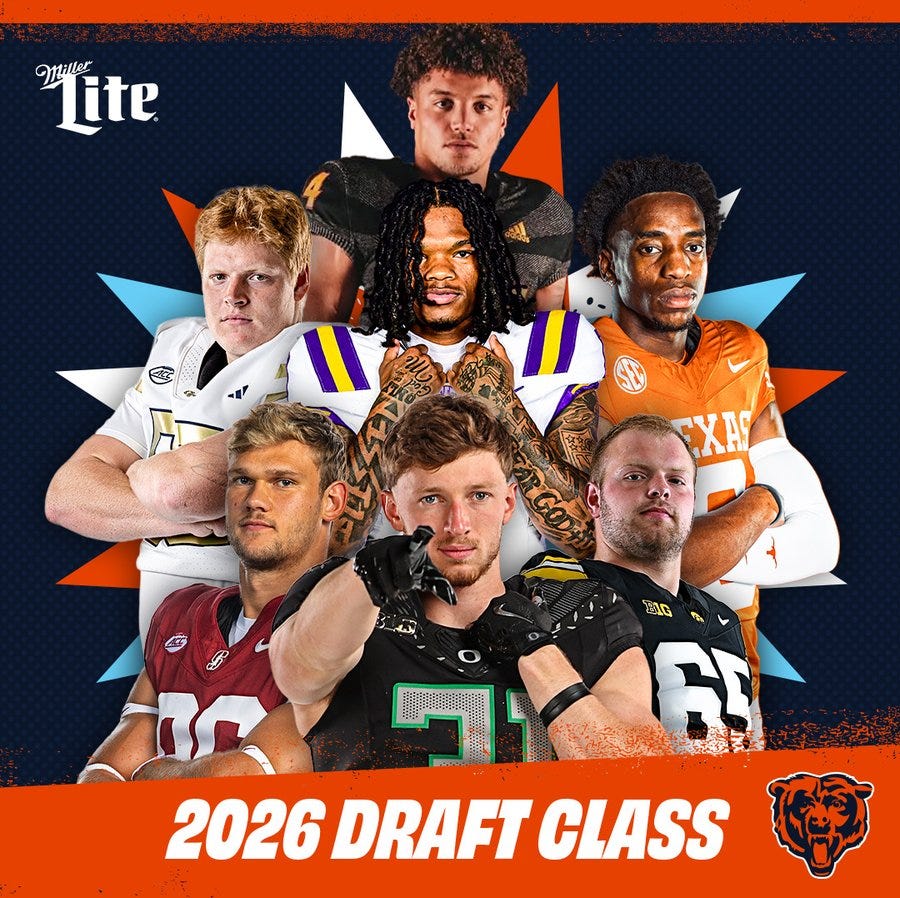
Chicago Bears 2026 NFL Draft
Round 1, #25: Dillon Thieneman, S (22): remote MCL - 1/10 medical concern
Round 2, #57: Logan Jones, C (24): major knee, ankles, hand fracture, age - 5/10 medical concern
Round 3, #69: Sam Roush, TE (23): clean, perfect reliability - 0/10 medical concern
Round 3, #89: Zavion Thomas, WR (22)
Round 4, #124: Malik Muhammad, CB (21)
Round 4, #166: Keyshaun Elliott, LB (22)
Round 6, #213: Jordan van den Berg, DT (24)
Da Bears stayed very medically safe with their 1st round selection in Thieneman. However, their 2nd rounder, Logan Jones, ratcheted up the risk to moderate levels in terms of injury history and age.
In the 3rd round, they grabbed a very clean prospect in Sam Roush, who I had hoped might fill the Lions’ TE need. A quick review of fellow 3rd-rounder, Zavion Thomas, shows that he is very clean as well.
From an age standpoint, the Bears were willing to draft a couple 24-year-old prospects, but four of their seven picks were 22 or younger.
Overall, the Bears appear to have prioritized a medically low-risk draft. Maybe Ben Johnson’s injury-filled experience (Aidan Hutchinson, Alim McNeill, et al) in his final year with the Lions was a factor.
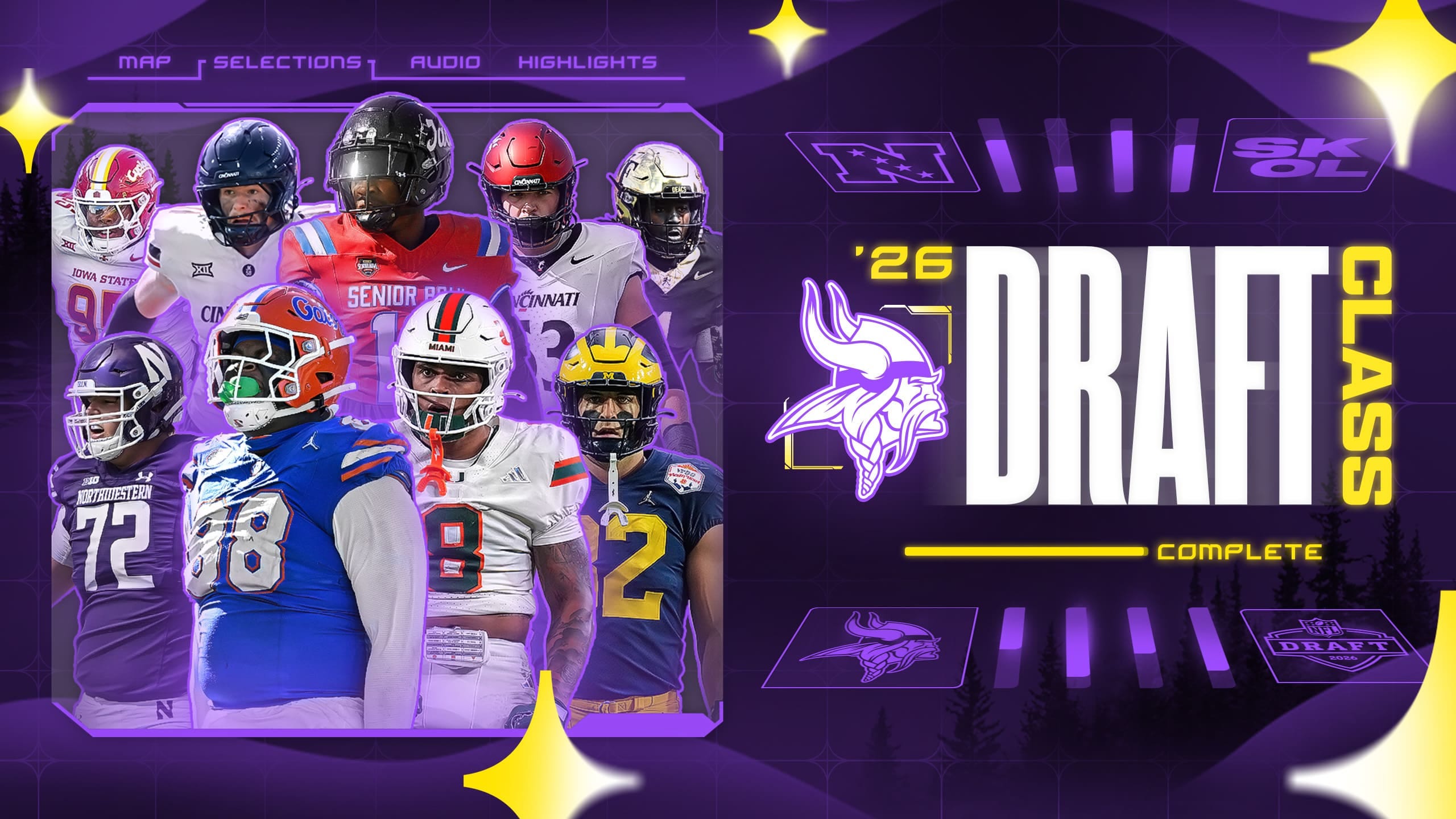
Minnesota Vikings 2026 NFL Draft
Round 1, #18: Caleb Banks, DT (23): 3 recent foot surgeries - 10/10 medical concern
Round 2, #51: Jake Golday, LB (23): late unspecified injury, quad, core muscle? - 4/10 medical concern
Round 3, #82: Domonique Orange, DL (22)
Round 3, #97: Caleb Tiernan, OT (23): clean - 1/10 medical concern
Round 3, #98: Jakobe Thomas, S (23)
Round 5, #159: Max Bredeson, TE/HB (23): foot or ankle to end final season - 4/10 medical concern
Round 5, #163: Charles Demmings, CB (23)
Round 6, #198: Demond Claiborne, RB (22): possible dislocated patella, multiple minor injuries - 3/10 medical concern
Round 7, #235: Gavin Gerhardt, C (24?)
The Skol gang entered the draft with an interim GM in Rob Brzezinski, which may have explained some of their draft philosophy. From an age standpoint, the picks leaned older, with 8 of the 10 draftees at least 23-years-old.
From a medical concern standpoint, the strategy was “high risk / high reward”.