
Preventing injuries in the NFL is always at the forefront of football fans’ minds. That’s even more true for Detroit Lions fans who saw an abundance of injuries sabotage the past two seasons.

A reader on X posed an interesting thought question with some good ideas. What could be done to make a dramatic difference in NFL injuries? Here are 5 of my ideas that could make a difference immediately:
#1. Mandate Turf Shoes Instead of Cleats on Artificial Surfaces
The famous physics equation states Force = Mass x Acceleration. Decreasing the interbody and intrabody forces will decrease injury risk. While player mass can’t be changed overnight, there are ways to decrease the acceleration portion of the equation.
Start by mandating turf shoes when playing on artificial turf. Turf shoes use short, rubbery nubs as opposed to longer, harder, plastic cleats. The idea is to slightly slow down players both in terms of linear speed and change-of-direction speed.
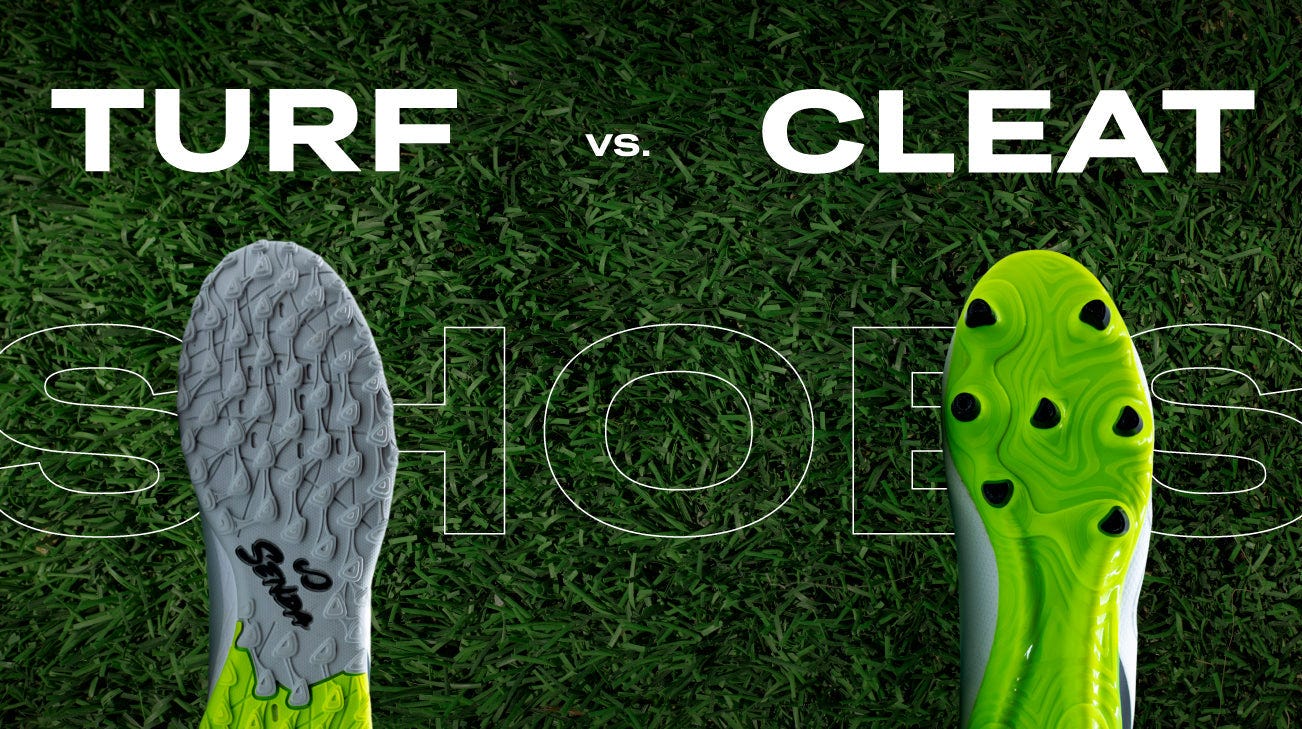
A slowdown in players should decrease impact injuries like concussions, fractures, MCL sprains, high ankle sprains, and contact ACL tears.
The turf shoes have an added benefit of being less “sticky” to the turf. The ability for the foot to slip out when the player is impacted can help prevent the foot, ankle, and leg from getting trapped in dangerous positions.
This play from 2024 on the Lambeau Field hybrid turf shows how foot slippage may have prevented injury to Jahmyr Gibbs’ ankle and knee…
#2. Slow Down Artificial Turf Fields
Develop artificial turf fields that are slower for players. Grass is generally slower, so try to simulate that with a turf field. Maybe that means a different consistency of the rubber pellets that make up the turf “soil”. Maybe it means longer turf “grass” with more pellets.
Will this affect fan enjoyment? No way. Nobody will care (or even notice) that a player is running 18mph vs 20mph. It’s all relative out there. A fast player will still look fast.
#3. Implement Stricter PED Testing and Penalties
Performance-enhancing drugs (aka steroids) increase both the acceleration and mass variables of that physics equation. Players on PED’s increase the risk to themselves and to the other players.
How to decrease PED usage? More effective testing, more efficient testing, more frequent testing, and more punitive punishments are worth pursuing.
#4. Reduce Total Player Snap Counts Per Season
Fewer snaps should directly result in fewer injuries, especially the fluky ones of players colliding into each other. A small decrease in snaps shouldn’t affect fan enjoyment of the game much, if at all. If you study the snap counts from game to game, there is a great deal of variability.
Aidan Hutchinson’s snap count data shows how much variability there is on a game-to-game basis…

Snap counts could be reduced by increasing the situations where a running clock is used, or increasing the play clock by a few seconds.
#5. Increase Rest and Recovery Time During the Season
There is debate whether rest time actually decreases injuries, as discussed in a previous Lions Medical Mailbag. But it’s likely that more bye weeks would help recovery and decrease accumulation injuries like what may have happened with Brian Branch’s Achilles and Sam LaPorta’s herniated disc in 2025.


Now that I’ve shared some of my ideas, please feel free to share your ideas to reduce NFL injuries.
I think there's a trade-off (injury-wise) when it comes to turf shoes, but I think the physics works in their favor. Obviously, if your shoes are going to slip, you're going to get more "slip" (linear) injuries like strains or falls (e.g., slipping backwards and hitting your head), but with cleats (rotational), as Dr. Liao pointed out, you're more prone to serious knee, ankle, and foot injuries because of how well they grip the playing surface.
In theory, turf shoes should be easier to adopt. But once you start talking about slowing down the speed of the game, you're fighting an uphill battle. It took years for the NFL to make kickoffs, a play that we see only 10 times a game on average, safer.
However, I think that mandating a specific type of playing surface that has been studied and proven to reduce injuries would be reasonable. Grass can be a double-edged sword, though. It's a living surface, and not all grass is the same. Players hate Soldier Field and the Steelers just installed brand new grass at Acrisure stadium over the summer because it was rated as the worst surface to play on in the entire league.
Overwhelmingly, the #1 way to reduce injuries is to reduce the amount of playing time or games. But with the NFL pushing for an 18 game season, I'm not sure how they're going to accomplish that. Ultimately, at least for now, it's going to come down to the Lions themselves, and how and when they choose to play their specific players, but there's also just a boatload of luck that factors in, too. Fingers crossed this year.
Get rid of artificial turf. Add an extra bye week where it's the same week for all teams. Perhaps set a snap count limit for all players except QB and center. Every other position could be rotated. Maybe increase the roster to 55 players active for every game. This would apply to all teams equally.
For the Lions who seem to be near the top of the injury parade every season, it might be enough to get into a Super Bowl with enough good players still able to play.